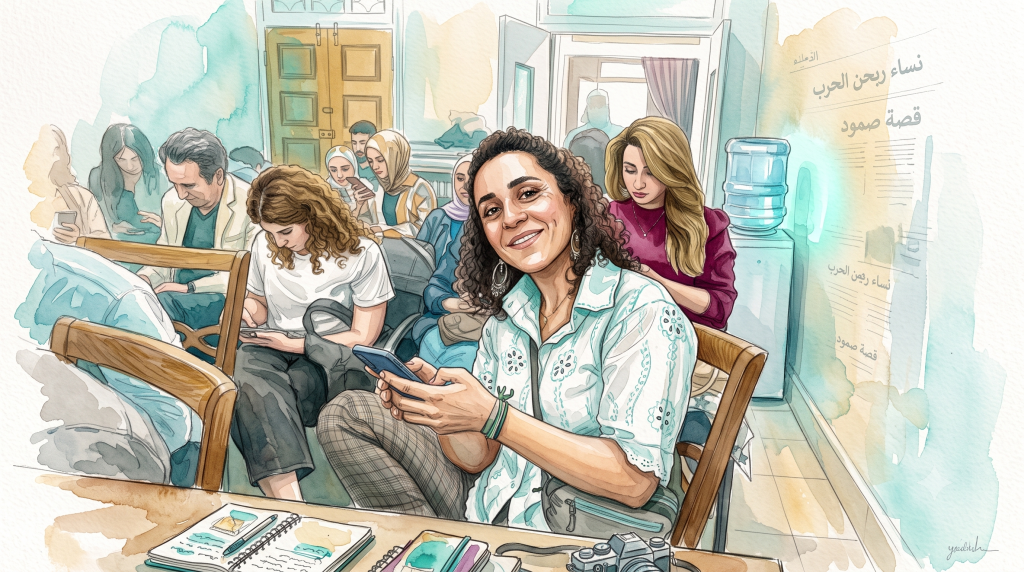
Tuesday Talks: Building Safer and More Equitable Spaces for Women Journalists
Women Who Won the War, in partnership with the Arab Reporters for Investigative Journalism (ARIJ), is launching a new online professional dialogue series titled “Tuesday Talks: Toward Safer and More Equitable Professional Environments for Women Journalists.”
The series is part of ARIJ’s ongoing regional program “I Will Not Stay Silent,” which advocates for issues affecting women journalists across the Arab region.
The series aims to create a space for dialogue and experience exchange around the key challenges facing women journalists in the Middle East and North Africa.
It is based on a shared belief that building a more equitable media environment begins by listening to women journalists’ experiences, creating spaces for meaningful professional dialogue, exchanging knowledge, and developing practical solutions rooted in the realities of women working in the media.
The series includes six open online discussion sessions held every Tuesday, addressing interconnected issues shaping women journalists’ professional experiences — from field reporting and newsroom leadership to investigative journalism, professional networking, professional identity, and building a culture of solidarity among colleagues.
These sessions are designed as open dialogue spaces for sharing experiences, reflecting on common challenges, and generating collective knowledge that can inform practical recom.
First Session: Fieldwork in Challenging Environments
The series opens with a session focusing on one of the core elements of journalism: fieldwork. Reporting from challenging environments often exposes women journalists to multiple and interconnected security, social, and professional challenges.
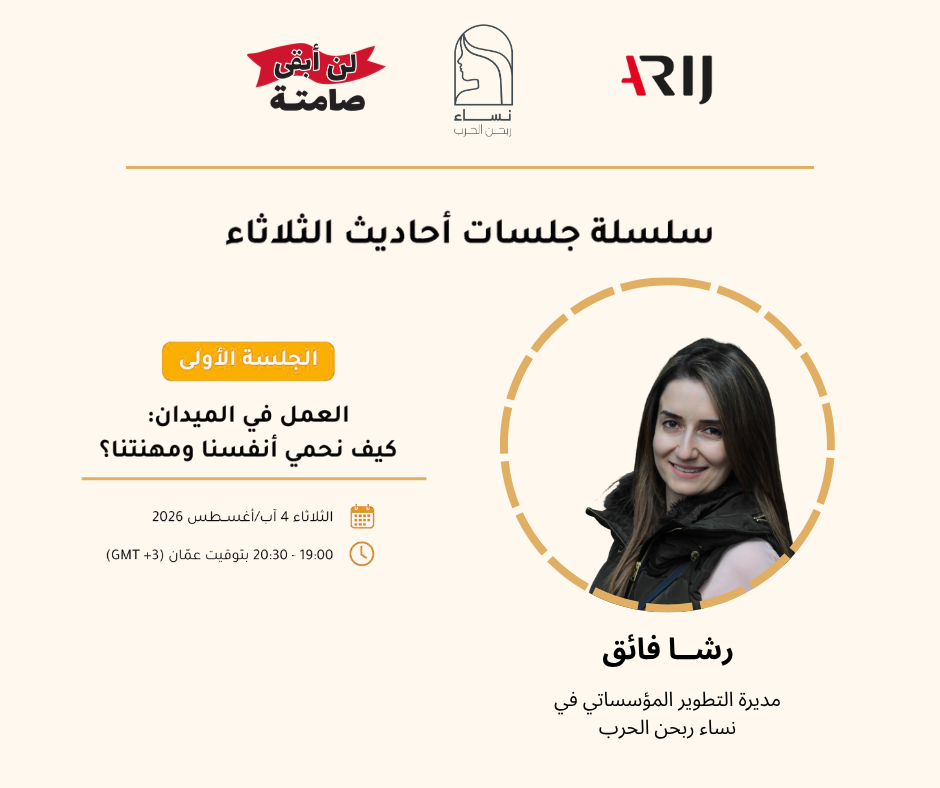
The session will be moderated by Rasha Faek, Institutional Development Manager at “Women Who Won the War.” It will provide a space for participants to exchange experiences, reflect on lessons learned, and discuss ways to strengthen support and protection for women journalists during field assignments.
Date: Tuesday, August 4, 2026
Time: 19:00 – 20:30 Amman time (GMT+3)
Registration link: Register via Zoom
Upcoming Session Schedule
The series will run from August 4 to October 13, 2026, with sessions held every Tuesday at 7:00 PM Amman time (GMT+3).
The upcoming sessions include:
Newsrooms from Within: Who Makes Decisions and Who Is Left Out? Tuesday, August 18, 2026
Beyond the Platform: Building Professional Relationships Without Compromising Personal Boundaries Tuesday, September 15, 2026
Professional Identity and Digital Reputation: Building a Presence That Opens Doors Tuesday, September 29, 2026
From Competition to Solidarity: Do Women Journalists Support One Another? Tuesday, October 13, 2026
Topics and dates for the remaining sessions will be announced progressively via our website and social media pages.
Who Are These Sessions For?
The sessions are open to women journalists at different stages of their careers, fact-checkers, media students, media professionals, and anyone interested in gender issues and media work environments.
Male colleagues who wish to listen, engage with their colleagues’ experiences, and help build safer and more equitable media environments are also welcome to participate.
A White Paper to Close the Series
The six sessions will form a collective dialogue journey addressing interconnected themes drawn from the realities of journalistic work. Key ideas, experiences, and recommendations emerging from the discussions will be compiled into a White Paper outlining practical recommendations for strengthening media environments that better support women journalists.
The White Paper will be officially launched during the 19th ARIJ Annual Forum, scheduled to take place in Amman, Jordan from December 4–6, 2026, as a contribution to a broader regional conversation on building safer, fairer, and more inclusive media workplaces.